

Latin America
and the Caribbean’s Path
to 17 SDGs: Integrated Approach
- 19–23 November 2024
- 6, Miklukho Maklaya st., Moscow (offline)
- MTS Link (online)
The Conference is expected to host over 1,500 participants — the experts in the field of sustainable development, environmental, social and corporate management, representatives of the world’s leading universities, international organizations and public authorities.
The central focus of the conference is the 17 sustainable development goals of the Latin America and the Caribbean region until 2030.
Core Target Audience: the representatives of expert scientific community of Russia, the BRICS countries, Latin America and the Caribbean.
The aim of the Conference is to discuss priority issues of our time, problems and challenges, possible trends and directions for the Development of Latin America and the Caribbean by the experts and youth scientific community, as well as to raise awareness about the global goals of sustainable development of humanity.
People’s Friendship University of Russia named after Patrice Lumumba will be a working platform for the exchange of experiences among young scientists, company leaders, representatives of public authorities and experts in the field of sustainable development, environmental, social and corporate management. Specialists will share their knowledge and experience to implement research, academic and socially significant projects to achieve the 17 UN Sustainable Development Goals. In 2024, the regional focus of the Conference is the Latin America and the Caribbean.
President of RUDN University
Chairman of the Conference Organizing Committee
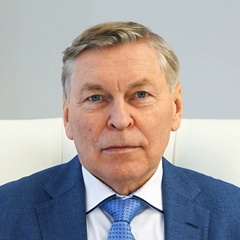
Dear friends and colleagues! Experts and young scientists, researchers, and discoverers!
I am pleased to welcome you on the sidelines of the Third International Scientific Conference of Students and Young Scientists “For the Sustainable Development of Civilization: Cooperation, Science, Education, Technology”!
The Conference is organized under the auspices of the Commission of the Russian Federation for UNESCO


RUDN University invites enthusiastic researchers and leaders committed to making a positive global impact to join the conference.
For this purpose, contests are organized as part of the conference:

It suggests that the quality of human life should be improved, and the negative impact on the environment should be minimized. The society’s demand for serious changes towards sustainability is increasing every year.
In 2015, the UN General Assembly developed the Sustainable Development Goals (SDGs). The final document of the General Assembly “Transforming our world: The 2030 Agenda for Sustainable Development” contains 17 global goals.


Eradicating extreme poverty for all people everywhere by 2030 is a pivotal goal of the 2030 Agenda for Sustainable Development. Extreme poverty, defined as surviving on less than $2.15 per person per day at 2017 purchasing power parity, has witnessed remarkable declines over recent decades.

Goal 2 is about creating a world free of hunger by 2030.The global issue of hunger and food insecurity has shown an alarming increase since 2015, a trend exacerbated by a combination of factors including the pandemic, conflict, climate change, and deepening inequalities.

Great strides have been made in improving people’s health in recent years. 146 out of 200 countries or areas have already met or are on track to meet the SDG target on under-5 mortality. Effective HIV treatment has cut global AIDS-related deaths by 52 per cent since 2010 and at least one neglected tropical disease has been eliminated in 47 countries.

Progress towards quality education was already slower than required before the pandemic, but COVID-19 has had devastating impacts on education, causing learning losses in four out of five of the 104 countries studied.

Gender equality is not only a fundamental human right, but a necessary foundation for a peaceful, prosperous and sustainable world. There has been progress over the last decades, but the world is not on track to achieve gender equality by 2030.

Access to safe water, sanitation and hygiene is the most basic human need for health and well-being. Billions of people will lack access to these basic services in 2030 unless progress quadruples. Demand for water is rising owing to rapid population growth, urbanization and increasing water needs from agriculture, industry, and energy sectors.

Goal 7 is about ensuring access to clean and affordable energy, which is key to the development of agriculture, business, communications, education, healthcare and transportation.

Goal 8 is about promoting inclusive and sustainable economic growth, employment and decent work for all. Multiple crises are placing the global economy under serious threat. Global real GDP per capita growth is forecast to slow down in 2023 and with ever increasing challenging economic conditions, more workers are turning to informal employment.

Goal 9 seeks to build resilient infrastructure, promote sustainable industrialization and foster innovation. Economic growth, social development and climate action are heavily dependent on investments in infrastructure, sustainable industrial development and technological progress. In the face of a rapidly changing global economic landscape and increasing inequalities, sustained growth must include industrialization that first of all, makes opportunities accessible to all people, and second, is supported by innovation and resilient infrastructure.

Inequality threatens long-term social and economic development, harms poverty reduction and destroys people’s sense of fulfillment and self-worth. The incomes of the poorest 40 per cent of the population had been growing faster than the national average in most countries. But emerging yet inconclusive evidence suggests that COVID-19 may have put a dent in this positive trend of falling within-country inequality.

Cities represent the future of global living. The world’s population reached 8 billion on 2022 over half living in urban areas. This figure is only expected to rise, with 70 per cent of people expected to live in cities by 2050. Approximately 1.1 billion people currently live in slums or slum-like conditions in cities, with 2 billion more expected in the next 30 years.

Goal 12 is about ensuring sustainable consumption and production patterns, which is key to sustain the livelihoods of current and future generations. Our planet is running out of resources, but populations are continuing to grow. If the global population reaches 9.8 billion by 2050, the equivalent of almost three planets will be required to provide the natural resources needed to sustain current lifestyles.

Every person, in every country in every continent will be impacted in some shape or form by climate change. There is a climate cataclysm looming, and we are underprepared for what this could mean.

The Ocean is intrinsic to our life on earth. Covering three-quarters of the Earth’s surface, contain 97 percent of the Earth’s water, and represent 99 percent of the living space on the planet by volume.

Goal 15 is about conserving life on land. It is to protect and restore terrestrial ecosystems, sustainably manage forests, combat desertification, and halt and reverse land degradation and stop biodiversity loss. Earth’s ecosystems are vital for sustaining human life, they contribute to over half of global GDP and encompass diverse cultural, spiritual, and economic values.

Goal 16 is about promoting peaceful and inclusive societies, providing access to justice for all and building effective, accountable and inclusive institutions at all levels. People everywhere should be free of fear from all forms of violence and feel safe as they go about their lives whatever their ethnicity, faith or sexual orientation.

Goal 17 is about revitalizing the global partnership for sustainable development. The 2030 Agenda is universal and calls for action by all countries — developed and developing — to ensure no one is left behind. It requires partnerships between governments, the private sector, and civil society.

Vladimir Filippov, Chairman of Organising Committee, President of RUDN University
Oleg Yastrebov, Rector of RUDN University
Conference hall of the Faculty of Economics
Conference hall of the Faculty of Economics
BIOSPHERE TRACK
Academic Council Hall
Conference Hall of the Faculty of Economics
Rectorate Hall
Institute of Medicine Building, Hall 1
Hall 1
SOCIETY TRACK
Academic Council Hall
Main Building, Room 171
Main Building, Room 172
Rectorate Hall
Conference Hall of the Faculty of Economics
ECONOMICS, POLITICS, LAW, PARTNERSHIPS TRACK
Main Building, Room 170
Main Building, Room 171
Hall 1
Rectorate Hall
Academic Council Hall
Conference Hall of the Faculty of Economics
SOCIAL INSTITUTES OF THE FUTURE SOCIETY BLOCK
Main Building, Room 353



Together with Volgograd State University (Volga State University), a thematic special issue is planned in a peer-reviewed scientific journal “Bulletin of the Volgograd State University. Episode 4. History. Regional studies. International relations”.

Requirements for the design of articles: section PAPER GUIDELINES.
Articles are sent to chupin-al@rudn.ru. In the subject of the letter, specify “17 SDG_ Special issue_Full name”.
The Organizing Committee of the conference reserves the right to recommend the submitted materials to the journal, depending on the subject of the article, its scientific level and uniqueness. All submitted articles that are considered suitable for a thematic special issue are carefully peer-reviewed to ensure the highest level of quality.
For media accreditation, please contact: press@rudn.ru
The accreditation procedure is available at the following link.

The RUDN University campus is located in the South-West of Moscow in one of the most beautiful and environmentally friendly places in the city.
NEAREST METRO STATIONS
Yugo-Zapadnaya (Sokolnicheskaya line)
Belyaevo (Kaluzhsko-Rizhskaya line)
HOW TO GET FROM YUGO-ZAPADNAYA METRO STATION
Buses 752 816 196 196к 226 250 261 330 404 699
Yugo-Zapadnaya Metro Station
Miklukho Maklaya street — RUDN University
HOW TO GET FROM BELYAEVO METRO STATION
Buses 752 261 145к 330 404 816
Belyaevo metro station
Miklukho Maklaya street — People’s Friendship University
Some of the university parking lots will be open to our guests during the conference.
PARKING MAP

In 2023, more than 1500 students and young scientists from 63 countries of the world became participants of the conference. 145 experts - from 43 countries.
Fifty foreign organizations joined the discussion of Africa’s problems, including:

The conference covered more than 60 countries and 4 continents — Eurasia, Africa, North and South America.